Sunday, June 10, 2012

Chicken Satay


Satay is a common ‘street meat’ in Thailand, Indonesia, and several other Asian countries.  It’s simple, easy and fun to make and has a nice, exotic taste that will delight time after time.  I fell in love with it at a local Thai restaurant, but now I generally make it at home on my grill.  Here’s how.

Chicken Satay

2 Large Boneless, Skinless Chicken Breasts, cut into strips. 
1 Teaspoon Salt
1 Teaspoon Sugar
2 Tablespoons Curry Powder
½ Cup Coconut Milk
Bamboo or other type of Wooden Skewers, soaked for several hours in water

First, cut your chicken into strips. 


I usually get five strips out of a breast, but if you want to make sure your Satay is nice, thick and juicy, you might just go with four strips per breast.

Next, make your marinade.  Mix the salt, sugar, curry powder and coconut milk in a small bowl.  


Make sure to use a good curry powder.  I’m fond of Ship Brand Madras Curry Powder.


If you don’t regularly keep curry powder on hand, I’d recommend seeking out a can of Ship Brand at your local Indian grocery.  It’s really flavorful, and will inspire you to flights of all sorts of culinary experimentation. 

Once you’ve mixed up the marinade, dredge the chicken strips in it, then lay them out on a tray.  


Cover them with any leftover marinade, then refrigerate for a few hours to let the marinade work in. 


When you’re ready to cook, light a medium-hot fire on your charcoal grill.  This will best replicate the way the street vendors cook Satay in Asia.  While your charcoal is getting going, skewer the chicken on the wooden skewers, one or two strips to a stick.  When the charcoal is ready, lay them out on the grill.  I usually grill them with the lid off of the grill, as this better replicates the technique used by the Asian street vendors.  To protect the ends of the skewers, I’ll lay a little foil under them on the grill. 


After a few minutes, flip the Satay.  It should have a nice char on the cooked side.  


Let the second side cook for a few more minutes, then it should be ready to go.  If you want, test a piece by pulling it apart to make sure the chicken is cooked all the way through. 

Serve with some white rice and a side of Thai Peanut Sauce.  Definitely don’t skip the Peanut Sauce (recipe here on last month’s An Eatin’ Man).  It makes the dish.  


Thursday, May 31, 2012

Thai Peanut Sauce


I can’t tell you how much I love, love, love Peanut Sauce.   It’s a Thai staple that goes great with everything from Chicken or Beef Satay to just plain white rice.  It’s also quite simple to make at home, though you might have to hit a specialty Indian or Asian market to get all your ingredients.   It’s worth the trip, though, as this homemade version is the best I have ever tasted, and will blow away any pre-made, store-bought Peanut sauce you might find. 


Peanut Sauce

1 Tablespoon Tamarind Concentrate
3 Tablespoons Sugar
3 Tablespoons Peanut Butter
2 Tablespoons Fish Sauce
1 Tablespoon Mild Red Curry Paste
¾ Cup Coconut Milk

Place all the ingredients in a bowl and whisk until a thin, creamy consistency is achieved.  Taste the sauce; resist the urge to eat it with a spoon! 

Serve with spicy Asian dishes like Chicken or Beef Satay, Grilled Fish, or just spoon over white rice.  


Monday, April 30, 2012

Sun Dried Tomato Cream Cheese Dip/Spread


On my first trip to New York City a little over twenty years ago, I was introduced to the delicacy that is the bagel.  I could go on and on about how much I love this dense, bready treat, particularly toasted with a ‘schmeer’ as I heard one old man put it, by way of asking for cream cheese to be spread on the bagel. 


Enjoying a bagel on the streets of Manhattan, April, 1992.

Every time I went back to New York, I made a point to breakfast on a bagel to two, and always with that ‘schmeer.’  Well, lo and behold on one trip I came across a deli that offered various flavored cream cheeses instead of just plain.  One of those flavors was sun dried tomato.  I tried it.  I was in heaven!  This spread was so savory, tangy and delicious I almost had to sit down to eat the bagel.  I almost needed a cigarette after a I was done.  Yes, it was that good. 

When I got back to Texas, I knew I had to replicate this spread. 

I’d been using sun dried tomatoes in pastas and such for some time, and I love the way the drying concentrates the tomato flavor.  I pureed some up and blended them with cream cheese and gave it a try.  It was good, but not anywhere close to the flavor from the NY deli.  So I made a few more batches, adding a couple of herbs and spices and such, and eventually I came up with a winner.

Sun Dried Tomato Cream Cheese Dip/Spread

1 8oz package of Philadelphia cream cheese
2 oz (by weight) sun dried tomatoes
2 oz pitted Kalamata olives, drained
2 tablespoons olive oil
1 teaspoon dried basil (or one tablespoon fresh)
2 garlic cloves, crushed
Pinch of salt

You can buy sun dried tomatoes a lot of ways, including the variety in a jar of olive oil.  I skip these and just buy the dry kind in a package, which I then rehydrate in some boiling water.  For this recipe, you can use either, but the dry kind are cheaper and lower in calories.  If you use the dry sort, add them to boiling water for five minutes or so, 


then drain and slice into thin strips. 


Add these to a small pan or saucier with the olive oil and sauté.  Immediately add the Kalamata olives (and note, they must be KALAMATA olives, don’t go cheap here and substitute plain old black or green olives, for the flavor won’t be the same.  You might get away with some Nicoise olives, but trust me, the only olives that give you that real NY deli flavor will be good old, purple Kalamata). 


Next, add the basil, salt and crushed garlic and sauté all, stirring constantly to keep the tomatoes from burning, until you smell the roasted garlic aroma wafting up from the pan.  Remove from heat and set aside. 

Add the sun dried tomato mixture to your food processor and process until a smooth paste forms, with few lumps of tomato or olive remaining.  


This will probably take about a minute.  Next cube up your cream cheese 


and add this to the food processor.  Blend until smooth.

Depending on your tomatoes, sometimes the mixture comes out a beige color, sort of the color of Thousand Island dressing, which I don’t think is quite all that appetizing, so I add a few drops of red food coloring to brighten. 


You can serve the mixture at room temperature as a dip, and it will yield nicely to crackers such as Wheat Thins.  Or, you can chill the mixture and use it as a spread on crackers, sandwiches, or of course, the ubiquitous bagel.

Until next time,

Forgetaboutit!

Chris

Saturday, March 31, 2012

Sauce Choron


For March, I updated my Bearnaise Sauce entry to include a variation called Sauce Choron.  Click here and scroll down to the bottom of the entry to check it out.

Chris

Wednesday, February 29, 2012

Buttermilk Biscuits


Real homemade biscuits from scratch—there is just nothing like them in the world.  Crumbly, flaky, buttery, melt-in-your-mouth delicious.  Canned biscuits can’t hold a candle to ‘em.  Frozen biscuits fall flat on their face.  Once you try homemade, you’ll awaken long sleeping memories of the incredible biscuits your mother, or perhaps grandmother, used to make. 

Before I go on, I’ll make a comment for my international friends.  Throughout most of the rest of the world, the word ‘biscuit’ refers to what we here in America call a ‘cookie,’ that is, a sugary sweet, twice-baked confectionary treat.  But here in the U.S., particularly the South, a biscuit is a savory, individual serving-sized piece of quick bread leavened with baking powder/soda (as opposed to a ‘roll,’ which is leavened with yeast).   An American biscuit is probably most similar to the British ‘scone,’ but there are still differences. 


The American biscuit originated in the southern states, probably in the 17 or 1800s, but perhaps earlier, when settlers had to make do with whatever dry ingredients they could bring with them.  For this reason, biscuits also remained popular as the nation expanded into the west, where biscuits were cooked on cattle drives and such in Dutch ovens over a campfire. 

But enough history.  Let’s get to the biscuit making. 

Buttermilk Biscuits

2 Cups Flour
1 tablespoon baking powder
¼ teaspoon baking soda
1 teaspoon salt
5 tablespoons butter
3 tablespoons shortening
¾ to 1 cup buttermilk

The simple list of ingredients can be deceiving.  Biscuits can be temperamental to make, and this is one of the reasons people often turn to the dreaded canned or frozen biscuits.  But once you taste these savory, mouth-watering treats, you’ll know the effort was worth it. 

Preheat your oven to 450F

Combine the dry ingredients in the bowl of your food processor. 

Add the butter and shortening in chunks to the bowl,


and cut in until the mixture just resembles a coarse meal. 


Transfer to another bowl, and add the buttermilk and mix until just combined.  


You will probably use up to a cup of buttermilk, as you want the mixture to be somewhat wet, but don’t overdo it.  We’re now entering the critical, difficult phase of biscuit making that usually turns most people off of the process.   That’s because the dough can be very difficult to handle, and if you over handle it, it can overdevelop the glutens in the dough, leading to tough biscuits. 


Dump the dough out on a floured cutting board or countertop, and lightly pat it out to about ½ inch thickness.  Fold the dough over and repeat about four or five times.  


On the last pass, leave the dough about one inch thick.  Don’t use a rolling pin for this—you’ll over-stimulate the gluten.  Just pat it out.

Use a biscuit cutter to cut the individual biscuits and transfer them to a greased baking pan.  


Note:  If you don’t have a biscuit cutter, you can use the rim of a glass to do your cutting, but your results 
won’t be as good as with a cutter. 

Bake at 450F for 10-12 minutes until the biscuits have risen and turned a nice golden brown.  


Don’t over-bake as they will dry out.  Serve immediately with plenty of butter.   


Until next time, 

Fix ya some Biscuits!

Chris


Sunday, January 29, 2012

Falafel


In 1999 I traveled to Egypt, which was quite a rigorous yet rewarding trip.  I discovered many cool things during this sojourn through the Sahara, not the least of which was these delicious little bite-sized delicacies:  falafel. 

Overall, the food was hit or miss in Egypt, but when I saw falafel on the menu, I knew at least I wouldn’t go hungry.  These little treats are not only delicious, but quite nutritious as well; they’re so packed with protein they are considered a good meat substitute for a vegetarian diet. 

I set about trying to make falafel when I got back home, but my first attempt was an abysmal failure.  (More on that later)  But after taking a Lebanese cooking class at Central Market, which included a great falafel recipe, I was on my way to making my favorite Middle Eastern dish. 


Falafel

1 Cup Dried Chickpeas, soaked overnight
1 Cup Dried Fava Beans, soaked overnight
½ Cup Bulgur Wheat
1 Medium Onion, diced
2 to 3 Cloves of Garlic, crushed
½ Bunch of Fresh Cilantro, stemmed and chopped
1 Tablespoon Lemon Juice
1 Tablespoon Olive Oil
1 Teaspoon Baking Soda
2 Teaspoons Sea Salt
2 Teaspoons Cumin
2 Teaspoons Paprika
½ Bunch Fresh Parsley, finely minced
Peanut Oil or Vegetable Oil

Soak the fava beans and chickpeas overnight.


Drain the beans and rinse them thoroughly.  Place them in your food processor and pulse until the beans resemble coarse bread crumbs. 


Add the bulgur wheat, onion, garlic, lemon juice, olive oil, baking soda, sea salt, cumin and paprika.  Start pulsing the mixture until it resembles a coarse pasty consistency.  Add the parsley and pulse until the mixture is a fine, gritty paste. 

Take a small amount of the mixture in your hand and form it into a small patty.  Place this on a tray lined with wax paper.  Continue making patties until you run out of batter.  This recipe usually makes around a dozen medium-sized patties. 


Next, place the tray of falafel patties in the fridge for about two hours to firm up and set, or if pressed for time, you can place them in the freezer for about thirty minutes. 

When you’re ready to cook, fill a large skillet about a half inch deep with peanut or vegetable oil.  I like to use peanut oil as it produces a good flavor and has a high smoke point, but any vegetable oil or even canola oil will work.  I’ve also experimented with using olive oil in an effort to be more ‘Mediterranean,’ but I haven’t noticed much difference in flavor, and the olive oil can get a bit smoky.  If you go this route, make sure to use a light olive oil. 

Heat the oil to 375 degrees Fahrenheit, then carefully use a fork to lower your patties, one at a time, into the oil.  Fry in batches of four to six patties, about a minute and a half to two minutes a side, until they are golden to deep brown in color.  


Drain on paper towels 


and serve immediately on their own, or with some hummus, tahini  or tzatziki sauce. 


One final note.  I have found a wide variety of falafel recipes, but I feel the one above comes closest to the flavor of what I tasted in Egypt (other places may differ) while staying true to authentic Middle Eastern ingredients.  The first time I attempted to make falafel, however, the patties immediately disintegrated when I put them into the oil.  I researched matters and some recipes called for using an egg in the mix.  I tried this, and the patties did hold together fine, but from what I gathered this wasn’t a very traditional Middle Eastern ingredient.  I tried other methods, and finally came up with the recipe outlined above.  One thing I note, in my first attempt I had no bulgur wheat in the mix, and I also just formed the patties and immediately fried them.  I think that is the reason they disintegrated.   The time in the fridge or freezer allows the patties to firm up somewhat, so make sure you don’t skip this step, as it also allows the glutens in the bulgur wheat to set, further helping your patties stay together. 

Note, the falafel I made with egg tasted virtually identical to the version sans egg, so there is nothing really wrong with using this, as far as the final product is concerned, unless you are serving some of your vegetarian/vegan friends.  In that case, skip the egg for sure.  

Chris

Wednesday, December 21, 2011

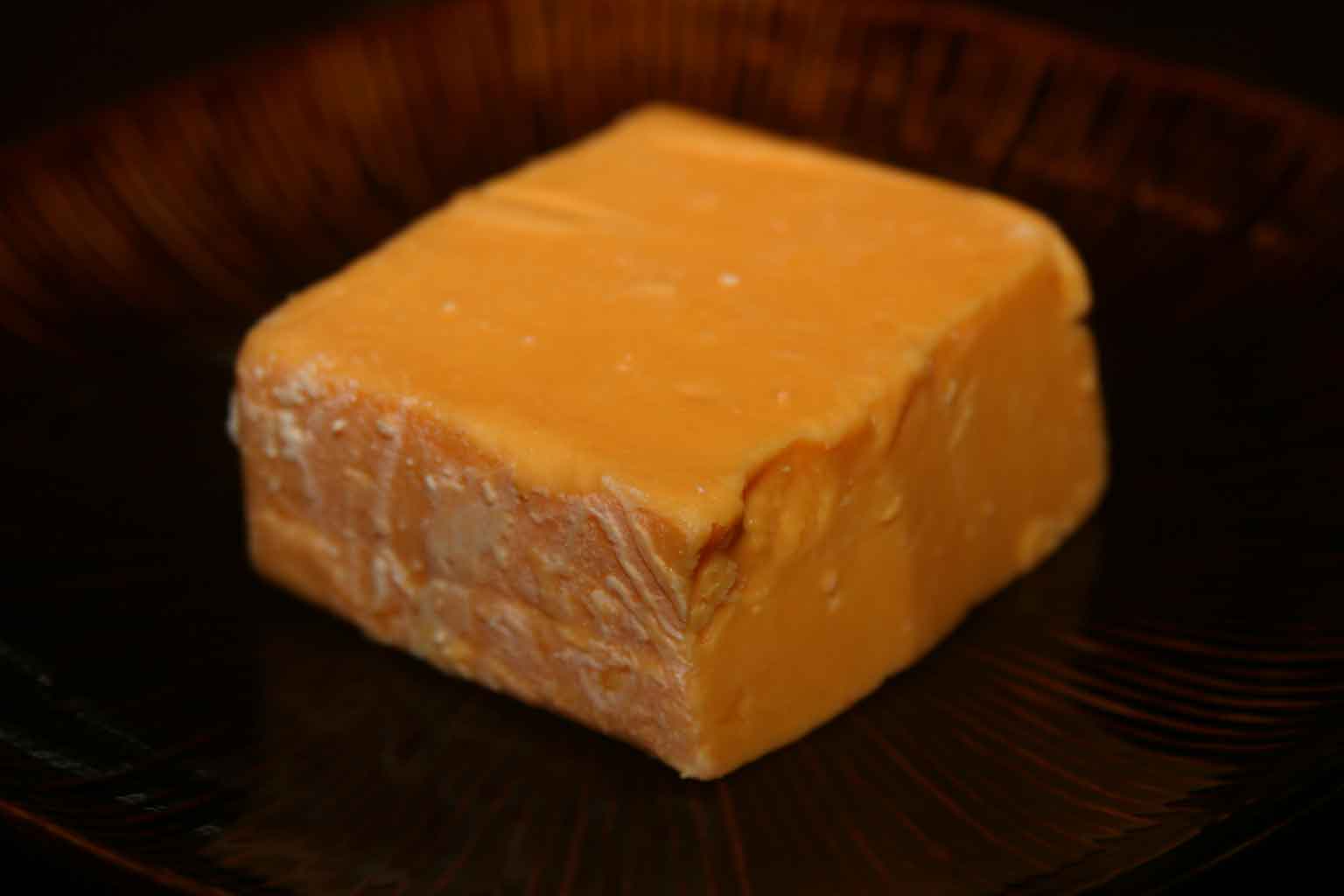
Cheddar Cheese


I love, love, love cheese.  And if I had to pick a favorite...well...gosh...I just couldn’t.  There are so many wonderful varieties out there, from pungent, creamy blues like Roquefort and Stilton to decadent triple crème brie to tangy goat varieties like Bucheron or Humboldt Fog to nutty and mild Port Salut to Belgian Trappist  cheeses made with beer to...well, I could go on and on.  But it’s hard to beat a great cheddar cheese.
    
The problem with cheddar is that it has become so ubiquitous that it could be considered the ‘Merlot’ of cheeses.  It’s the default cheese, the common denominator, the rule instead of the exception, and thus cheddar becomes, in many cases, marginalized, bland, and about as exciting as a slice of plain white bread.   The good thing about cheddar is you can find is practically anywhere.  The bad thing is the bulk of what is out there in our supermarkets and even specialty stores is often homogenized and practically tasteless.  But don’t let this sully your opinion of cheddar.  When created carefully and aged appropriately, cheddar can be one of the world’s great cheeses. 


Cheddar cheese of course originated around the village named Cheddar in England, and it is still made there.  Since the appellation ‘Cheddar’ is not controlled like the names of some other cheeses, it can be difficult to find cheddar from Cheddar, but there are many fine English cheeses that are similar that can be found in specialty cheese shops or places like Whole Foods or Central Market.  Some of these cheeses are Red Leister, Single or Double Gloucester, Derbyshire, or Cheshire.  Before cheese purists run me up on charges, let me stress that I’m not asserting that these cheeses are cheddar, but merely that they are similar enough in character as to satisfy someone looking for ‘authentic’ cheddar from the eponymous village.  

Good cheddar is also made in the United States.  Vermont is famous for its white cheddars, and many are quite good, but with popularity comes surplus, and then surfeit, meaning that there are so many ‘Vermont cheddars’ on the market today that many are bland and unexciting.  Look for VC’s that are well aged at least a year and half, and try to find a cheese monger who will let you taste their wares first.  (Good advice no matter what sort of cheese you are buying).

Wisconsin is of course the center of cheese production in the States, and thus produces the bulk of the cheddar that is made here, and unfortunately, this is where much of the unexciting stuff comes from.  But I have to say that hands down the best cheddar I ever tasted also comes from Wisconsin.  This is a cheddar created by the Wisconsin Cheese Mart that is aged an astounding NINE YEARS before it is sold.  


I discovered it by accident.  I was on a business trip to Milwaukee and had some time to kill, so I wandered into their store.  I ended up coming out with several pounds of cheese to take back home, including a brick of this amazing nine-year-old stuff. 

Never have I tasted a cheddar cheese like this before.  The flavor is rich and almost overpowering, the sharpest, tangiest cheese you’ve ever tasted.  I would compare tasting a bite of this cheese to the depth of flavor one finds in a bite of a steak from the finest steakhouse in the land.   And it’s not just the flavor that is a part of the experience, but the texture as well.  All this aging causes it to be crumbly, but somehow there is still a fair amount of moisture content in this cheese, giving a creaminess to the texture.  As you bite into it, you discover a delightful, subtle crunch as well, as there are tiny granular crystals (calcium lactate) that have formed in the cheese.


So if you want to try cheddar cheese at its true best, check out the Wisconsin Cheese Mart.  I’ve ordered several of their cheeses by mail order over the years, and they always arrive in great shape.  I checked the website, and they are currently out of the nine-year-old cheddar, but they have a seven-year-old version that I’ve tried and it is comparable to the nine year version. 

Until next time, 

Stay Cheesy,

Chris